It has been 40 years since The Redskins released their one and only full length album ‘Neither Washington Nor Moscow’ in 1986. The staunchly political band may have imploded shortly thereafter, but in their short lived career as a functioning band they cemented a reputation as a group that would put their principles above all else. In this post we revisit the political backdrop of one of the most radical bands of the punk movement and have enlisted the insights of Professor Gregor Gall (who has written a book about the ethos of the band) to help us!
Radical Roots
To be considered a radical political group even within the context of punk and punk-adjacent genres, should demonstrate just how important political positions were to a group like The Redskins. Although their career may have lacked the longevity of some of their contemporaries, their unwillingness to compromise their beliefs and values have stood the test of time. The band were formed in 1982 in Yorkshire as a trio comprising of singer-guitarist Chris Dean, Martin Hewes on bass and Nick King behind the drums (although he would later be replaced by Paul Hookham). When they initially formed as a punk band they were called No Swastikas and as you can probably tell from the band name, they were already an overtly political outfit and clear in what they stood for. They were members of the Socialist Workers Party (SWP), their debut single was a tribute to Leon Trotsky (‘Lev Bronstein’) and their original record label CNT was named in honour of the Spanish anarcho-syndicalist party who refused to comply with Soviet instructions during the Spanish Civil War. For the members of The Redskins, liberation and revolution were more than just buzzwords to fill your songs with- they were committed to the idea of working class organisation on a global scale.

Ready to Strike
They weren’t the only band making political statements or social justice commentary during the 1980s, and that makes sense when you consider the direction of the country during this time and the multiple crises faced. This was the decade Margaret Thatcher sat in 10 Downing Street (she was elected Prime Minister in 1979 and wouldn’t leave office until 1990) and made a series of policy decisions and public declarations about how society should be organised that alienated and disenfranchised many social groups.
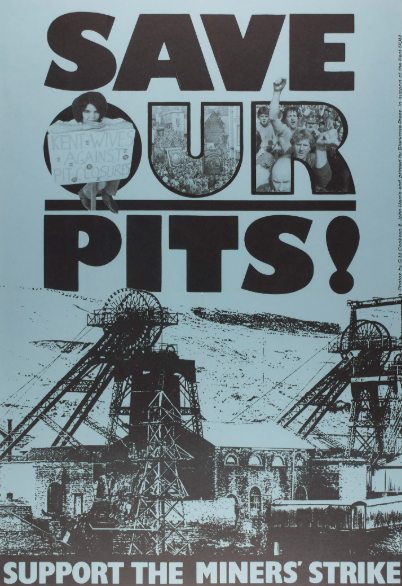
Thatcher’s Prime Ministership was fraught with indignities and challenges for the working class. Perhaps the most notorious of these was the strike that would go down as one of the longest running postwar industrial disputes, with implications that would reverberate across generations to come- the Miner’s Strike of 1984-85. The outcomes of the strike are still being felt in numerous communities across Britain today from Barnsley to Fife, from Caerphilly to Durham.
Across the year of strike action, the miners of pits and collieries across Great Britain were locked in a war with the Thatcher government, fighting the mass closures of coal mines which would have amounted to 20,000 job losses. Thatcher was determined to not lose face and make a statement that the age of union influence over government was over, and she had no mercy when it came to enforcing the closures and cracking down on picket lines and union activity. She met her match with the miners who rallied, organised and picketed with fervour. The side of the miners was bolstered by the solidarity of communities far beyond that of industrial workers- the LGBT community formed Lesbians and Gays Support the Miners (LGSM); Women Against Pit Closures and various regional and union-affiliated support groups all conducted fundraisers and supported picket lines. The counteraction was swift and brutal- thousands of officers were drafted in to police the picket lines, with violence often breaking out. This is best demonstrated with the battle of Orgreave on 18 June 1984, in which police used excessively violent tactics to quell the miner’s protests. South Yorkshire Police would eventually pay a total of £425,000 in damages to 39 miners who sued over assault, unlawful arrest and malicious prosecution.
The miners’ eventual defeat in 1985 was the end of an era for Britain’s trade union movement in many ways and helped cement Mrs Thatcher’s reputation as the ‘Iron Lady’. It was a defining moment in working class history and one that provided somewhat of a backdrop to the activities of the Redskins who were ensconced in the practice of industrial struggle. For them, trying to hold some kind of centre-ground or advocating for compromise was a capitulation to the right and a class betrayal. Other pop stars of the time may have wanted to tug on the heartstrings to get you to care about injustice, inequality and strife but it was difficult to find concrete arguments that diagnosed the ailments infecting society in amongst the lyrics and proclamations. Few bands were willing to wear their revolutionary ambitions without shame or dilution. That is, apart from the Redskins- they were unequivocal in where they stood amongst a sea of slightly impotent centrists, as Professor Gall explains:
“The Redskins were the most-left wing band in Britain in the 1980s because two of the three members were revolutionary socialists – being members of the Trotskyist Socialist Workers Party (SWP) – and this was evident in their lyrics, interviews and gigs. This meant they were far more left-wing than The Housemartins who talked of revolt but not of revolution.
There are many bands that say left-wing things in their lyrics (such as Gang of Four, The Three Johns). There are also many bands with members who call themselves socialists but this not very evident from their songs. The theory and practice of The Redskins – about using music to convey revolutionary socialist politics and some 25% of the gigs being benefits gigs for the likes of striking workers – meant they did practice what they preached and sought to reach out to the unconverted (rather than preaching to the converted)”.
‘Til the Fight is Won…
One of the band’s most well known songs- ‘Keep On Keepin’ On’– encapsulates a lot of the specific grievances that The Redskins had about labour relations and the exploitation of workers. The song talks about bosses who “say jump” and “the workers fall in line” and who use the “threat of the dole” to keep workers compliant. The song came out in October 1984, and was clear in what it identified as the problem for those who sell their labour- predatory bosses who “make us pay for their crises” and a working class that need to remain singularly united and not lose momentum.
“Although the song was written before the miners’ strike, it was updated and revised, being released on 2 November 1984, which was when the miners were facing defeat” explains Professor Gall. “It was a song of defiance and connected with those that supported the miners by raising money to sustain the strike. The radicalism of the song was that if the miners had won, it would have led to the defeat of the Tories and Thatcher, opening up a new progressive political situation in Britain. As a song of defiance to keep on struggling against injustice, it remains relevant for today and for tomorrow.
The song was one of the very few at the time to explicitly come out in support of the miners. Artists like Sade and George Michael donated money to the miners but did not come out publicly and say so, much less bring out records to say so (like Paul Weller did with The Council Collective and Billy Bragg did).”
The song garnered enough interest to get the band a slot playing on Channel 4’s The Tube at the height of the Miners’ Strike. Midway through their performance of the song, they brought on a Durham miner to deliver a speech but his mic was cut so it was not intelligible during broadcast.
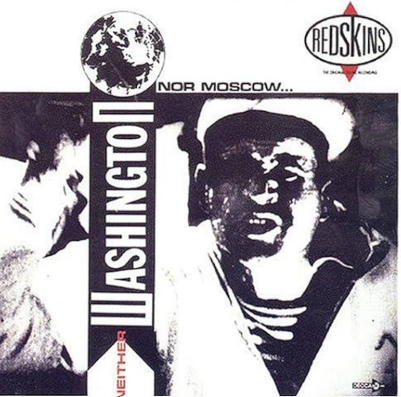
‘Keep On Keepin’ On’ is featured on the band’s only album, ‘Neither Washington Nor Moscow’, which was released in 1986. The album peaked at 31 on the British charts and contained other singles such as ‘It Can Be Done’ (which gave a historical overview of revolutionary socialism) and the empowering ‘The Power is Yours’ . The music was also interspersed with snippets of talks given by the SWP’s leader Tony Cliff and the title itself was a hark to their link with the political party:
“The phrase was the sub-heading used by the Socialist Worker newspaper at the time, being in full, ‘Neither Washington nor Moscow but International Socialism’” Professor Gall told us.
“It meant that socialists should neither support or believe in American capitalism and its imperialism nor the society in Russia which masqueraded as communist but which was not communist. Joseph Stalin turned Russia into a totalitarian state where workers were exploited and oppressed in order to support the ruling class of Russia – the upper echelons of the Communist Party and the Soviet state – and its imperialist ambitions. International socialism was the socialism of Karl Marx and Leon Trotsky who did believe that the emancipation of the working-class could only be achieved by the working-class making a revolution and then running society by themselves and for themselves.”
Let the Fight Back Begin
The Redskins stood for specific organising and ethical principles and were scathing about the wishy-washy approaches of their musical peers, who might talk about general concepts of justice and equality but they weren’t willing to be tied down to specific positions and were even less likely to get out on a picket line on a Monday morning. Bassist Martin Hewes told NME during the strike. “If you get too subtle, no one knows what you’re on about.” The band were hands on and as Professor Gall explains, they were proactive at supporting both local and international causes:
“The time of The Redskins’ existence (1981-1986) was a time of attacks on the working-class and the left but also resistance from the working-class and left to those attacks. The miners’ strike (1984-1985), the campaign against Apartheid in South Africa and the fight against rate-capping of councils to limit their spending were just some of the key struggles that The Redskins sunk their teeth into. The common thread was Thatcherism.
So, The Redskins played countless benefits gigs to support these struggles as used every opportunity to support these struggles when interviews by the music press and fanzines. The point of the band was their politics – they choose a musical style, a fusion of punk and soul, to provide an enticing sound on which to place their lyrics. All the lyrics were about big ‘P’ politics. There were no love songs. It was this commitment to practicing what they preached that cemented the connection between band and fans, with The Redskins still being a key band for many forty years after the band split.”
After the defeat of the miners’ strike, many of the U.K.’s left-leaning musicians joined an effort called Red Wedge to rally support for the Labour Party in the next election in a bid to vote Thatcher out of power. Those involved in the endeavour included the Style Council, the Communards, Billy Bragg, The The, and many more. The Redskins declined to throw their support behind the campaign as they didn’t see the Labour Party as a left wing option thanks to the party’s drift to the right and the centrism of its leader, Neil Kinnock. The merit of the band’s decision was hotly debated- were they making a morally consistent stand that meant they could continue to focus only on radical political action that they felt represented them ideologically? Or were they being dogmatic and petulant, missing a trick that would get a desirable outcome of ousting the Iron Lady? Professor Gall examines this decision in his upcoming book about the band:
“By refusing to participate in Red Wedge, The Redskins could be argued to have passed up an opportunity to speak to a wider audience for their particular politics and specifically speak to those within that audience that had their doubts about how left-wing Labour and its then leader, Neil Kinnock, were. If The Redskins had participated in Red Wedge and then found they were not allowed to speak freely about their politics, they could then have called Red Wedge out for being a ‘front’ for the Labour Party.”
The Redskins never compromised on what they believed in. They shunned empty rhetoric and politics-by-platitude even if it left them relatively isolated in the musical world. Chris Dean never romanticised the struggle or colluded with the idea that singing a song on stage should be the sum total of political action required by those who class themselves as allies:
“A lot of people have had grand ideas of punk. People had a romantic idea that music could change the world and all sorts of farcical and ridiculous ideas, like music on its own is so powerful, but it is not. It is incredibly bloody weak. It is only when it is linked to political struggle like during the Miners’ Strike that it really starts to mean anything.”
Forty years on from the demise of the band, and both the content of their messaging and their approach to direct political action seem just as relevant now as they did then. The issues the Redskins were determined to address and tackle- entrenched inequality, state oppression and Fascism- have not diminished in the last four decades. In many ways, things are as precarious for the working class and marginalised communities as they were back in 1986. An Oxfam report shows that in the 10 years after the financial crisis, the number of billionaires nearly doubled, and the fortunes of the world’s super-rich have now reached record levels. Worker’s leverage under rampant capitalism has significantly reduced and new threats to the labour market in the form of AI, unhampered tech oligarchs and attacks on worker’s rights are a clear and present threat. It seems that the bosses still say ‘jump’ and the workers still have to fall in line.
Considering the above, it seems understandable that the band are still a source of fascination and inspiration and quite beloved by many fans. For academics like Professor Gregor Gall, they are a sensible follow up to his previous book ‘The Punk Rock Politics of Joe Strummer’ which explored the evolution of the ideas and politics of The Clash frontman. Gall’s book on The Redskins- ‘Marxism in Music: Constructing a Communist Contra-Culture with The Redskins, Rock’n’roll and Revolution’ includes interviews and testimony from fans of the band to explore the impact and structure of their ideas and activism. It’s a rich topic and one that will no doubt be of interest to many punk fans, in the way that it is to Professor Gall:
“Having written a book about the politics of Joe Strummer and their influence on pushing people to the left, a book on The Redskins, their politics and influence on people was a logical next step. Indeed, in the Strummer book, The Redskins were the most mentioned band. That said, Strummer’s politics were less well defined and less radical than those of The Redskins, so it was interesting to study a band who specifically wanted to use music to recruit people to socialism and sustain them in that.”
Gall’s Redskins book is out in September 2026. Pre order and more info available HERE.
