
Punk music has played a crucial role in bringing attention to injustices and atrocities committed by the powerful, the rich and the greedy. The right curated playlist could serve as a good education on the people’s history of the world- covering wars, scandals and crimes that might otherwise slip from collective memory. In that way, punk does its bit for posterity and speaking truth to power- immortalising in song things that the powers that be may want us to forget.
In the camp of contemporary fiercely outspoken political punks, avant garde artist Meryl Streek is not afraid to take on the significant and urgent social issues of today. Pretty much every track by the Irish enfant terrible is an astute and acerbic take on modern life and religious and political corruption. But perhaps it is unusual to hear a punk song on a topic as specific and uncovered as the brutal acts committed against women and children by the Irish state and Catholic Church in their mother and baby homes. But this is exactly what is covered in Streek’s track ‘False Apologies‘.
The artist said of the track (taken from his incredible 2022 album ‘796’):
“‘False Apologies’ was a way to deal with my anger about the atrocities committed by the Catholic church against the young women and children of Ireland, specifically the mother and baby homes. Sadly not their only crimes, it made me sick that the government and church not only allowed this to happen but have actively tried to erase it from history. That in my mind is a step too far.”
The title of his album ‘796’ refers to the 796 bodies of women and children discovered in 2014 in a mass grave in a property in Tuam, County Galway, where St Mary’s children’s home stood. It was a church-run institution that housed thousands of women and children between 1925 and 1961. It was shocking to find the unmarked graves of so many with no records to indicate what had happened to them, and only the tip of the iceberg when it comes to the deaths and indignity committed in the name of preserving public piety. The true toll of these institutions – and the state’s inexcusable reluctance to acknowledge the deeds committed behind their doors- reverberates across generations.
But how did such an offence occur, especially with the tacit approval and facilitation of a religious organisation? You know, where they should have been more concerned about kindness, charity and justice rather than punitive cruelty? The answer lies in the intersection between misogyny and unchecked power underwritten by moral righteousness that the Irish state upheld for decades.
Why did these places exist?
An independent Irish state was founded in 1922 and at that time, figures suggest around 90% of the population of Ireland were practising Catholics. With those kind of numbers of adherents, it is perhaps unsurprising that the Catholic Church controlled numerous apparatus of the state such as schools and hospitals and demonstrated immense influence over the government and politicians. The outcome of all of this power and involvement in so many facets of everyday life for the Irish people, meant that the Church was everywhere. It was in your classroom, at your dinner table, in your bedroom and most insidiously perhaps…. in your head. Nowhere would be safe from God’s omnipresent eyes and judgement and so by extension, the Church was in everyone’s business and was very preoccupied (as a lot of organised religions are) with how fastidiously people were sticking to its moral commands.
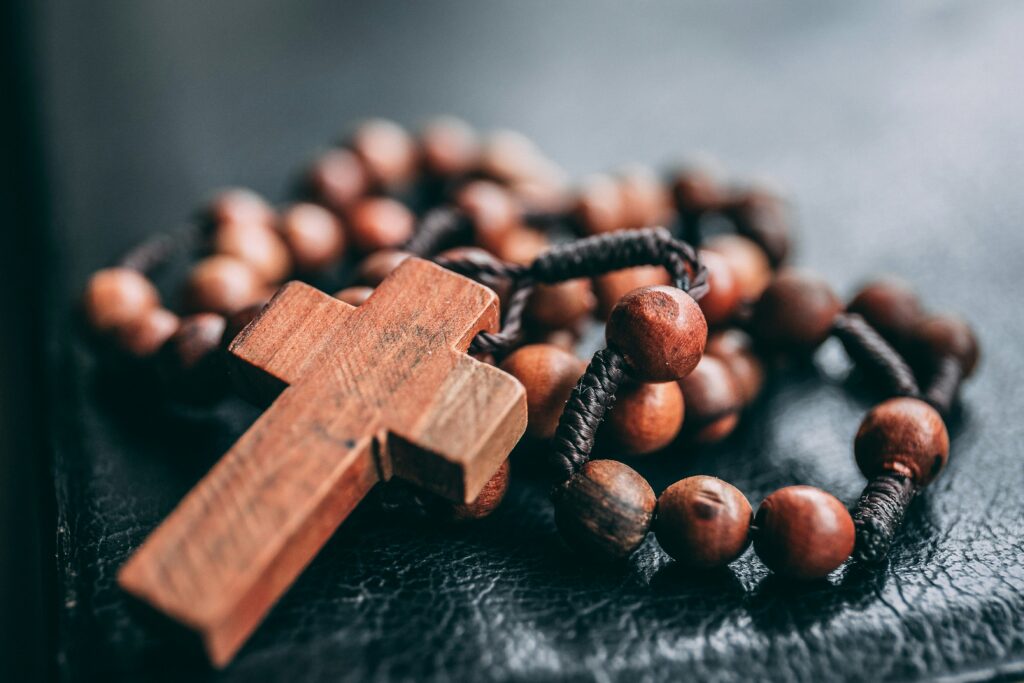
And there were a lot of moral directions to follow, many relating to relationships, sexuality, parenting and gender roles. Divorce was banned (until 1996) as were contraceptives (which were subject to various restrictions up until the 1980s). The Church maintained a spiritual and psychological hold on people with the ‘fire and brimstone’ approach, preaching eternal damnation for those who did not comply with religious edicts. Moral purity was the requirement and a lot of the burden for maintaining this unblemished standard of rectitude lay with women and girls.
There were various transgressions that could leave a woman facing the wrath of her family or community. This could be a perception of ‘promiscuity’ (a label almost exclusively reserved for women and girls); being unmarried mothers (or the daughter of an unmarried mother) or pregnant outside of marriage; those considered a burden to their families or the state or those who had experienced sexual abuse. Any of the former could leave young girls in a vulnerable position, at the mercy of those who wielded power over them such as their parents or the local priest. The church enforced their brand of callous moral rigidity through what Irish Times columnist Fintan O’Toole called “systematic terror”.
The prime example of this is the incarceration of women, and ofttimes children, in institutions referred to collectively as Magdalene Laundries. These laundries were effectively labour camps run by the Church with the day-to-day administration and operation run by nuns. The guise was that young women were ‘penitents’ who had nowhere else to go and through manual work and the guidance of the sisters, those lost souls could be pulled back from the brink by service to God and not to allow their behaviour to taint the god-fearing folks of the outside world. In reality, the laundries (as they are collectively referred to) saw AT LEAST 10,000 women and girls imprisoned to provide labour that financially benefitted the Church and saw them psychologically, physically and sometimes even sexually abused.
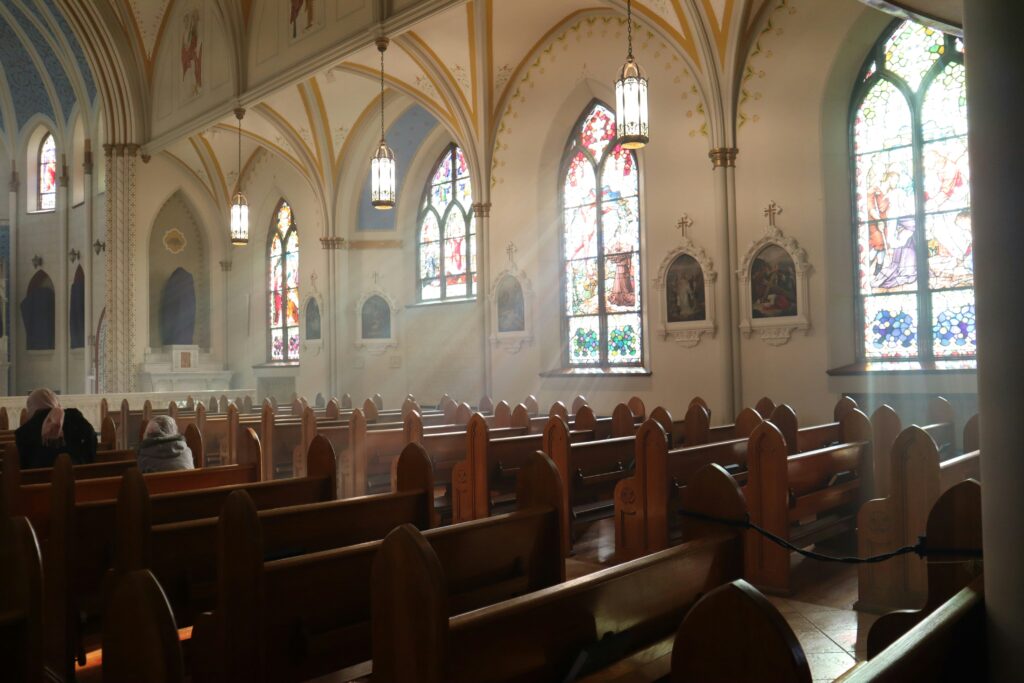
Women could be turned over to the homes by the criminal justice system, transferred from mother and baby homes, or sent by police, priests, social workers and in some cases, signed over by their own families. Once there, their individuality was stripped- their hair was cut short, their possessions confiscated, their names changed. Personal connections were severed- contact with their friends and family on the outside was not encouraged and therefore tightly controlled and friendships between the girls was forbidden.
The actual day to day lives of those in the laundries was dominated by work that was given to the home by local businesses, private households, religious institutions and various government departments. The women washed, ironed, sewed and toiled for hours every day, seeing none of the remuneration that was paid to the institution. There was no education provided and no oversight of conditions by any external authority.
The laundries are notorious for their brutal conditions and coupled with their lack of rigorous record keeping, it is probably impossible to know for sure how many women, children and even babies perished in the homes without recourse to proper procedure, investigation and dignified treatment. As the grave in Tuam demonstrated, bodies were buried in efforts to maintain a veil of secrecy and avoid outside scrutiny. According to the Justice For Magdalene’s Research project:
“It was common for the girls and women to believe that they would die inside. Many did: comparison of electoral registers against grave records at the Donnybrook location shows that over half of the women on electoral registers between 1954 and 1964 died in that institution”.
The last of these places was only closed in 1996.

“The Silence is Crippling…”
You would think that in the presence of overwhelming evidence of the abuses committed in these laundries would mean sincere and unreserved apologies from all involved would be forthcoming- but you would be mistaken. The Irish state has at various times tried to avoid accountability for the fact these places ran with full knowledge of wider societal institutions (some even being customers) including government, often arguing that they were privately-run so not their problem or that everyone entered willingly. An impending claim for compensation that may follow an admission of guilt is perhaps one explanation for the reluctance. It was 2013 that the (then) Irish Taoiseach, Enda Kenny, formally apologised on behalf of the state for its role in the Magdalene laundries. He said: “For 90 years Ireland subjected these women, and their experience, to a profound indifference. By any standards it was a cruel and pitiless Ireland, distinctly lacking in mercy”.
A full, specific apology by the Catholic Church is still outstanding.

The human rights scandal of the incarceration of women and girls and their enforced servitude is still something that looms large over the psyche of Irish society. As the church’s influence lessens, and details of other scandals continue to come to light, Ireland casts its spotlight not just on the church and the government but on the wider society at the time. The cruelty, judgement and collusion requires engagement and acknowledgement and this is where songs like Streek’s ‘False Apologies’ can articulate the rage that many feel on behalf of the victims. The track contains references to the key components of what make this history so shocking: the atrocity committed under the guise of religious belief (“blood all over the Bible”); the role of the church in the commission of the abuse and the wider attempt to conceal the crimes (“bunch of crooks”, “covered up by the state”). The song also alludes to the dehumanisation of the women and children and how their individual stories may have been lost even in the attempt to gain justice – “these victims have names”.
‘False Apologies’ is well placed on Meryl Streek’s 2022 album ‘796’, an album that paints a portrait of a country impacted by inequality, social injustice, greed, hypocrisy and psychic stagnation. His vitriolic spoken word plays over, across and under a variety of soundscapes and soundbites, a political analysis told through the stories of those existing in the harsh capitalist conditions of the modern world. In ‘False Apologies’, the sins of the past are brought to a new audience, Streek playing a key role in ensuring that silence is not given any chance to wash across the crimes of organisations that still stand today, operating with seeming impunity.
The song is a searing reminder that mere words and gestures cannot erase the pain, loss and generational trauma that comes from stealing years of women’s lives. And that justice delayed is ultimately justice denied.
To find out more about the work of the Justice for Magdalene’s Research Project, look HERE.
To buy/stream Meryl Streek’s album ‘796‘, click HERE.
