
With 30 years in music under her belt, Monique Powell- the frontwoman for effervescent ska punks Save Ferris- has seen a LOT of changes in what a band has to do to navigate through the industry. And it is an industry that is notorious for chewing people up and spitting them out, particularly if said people got involved in band life at a tender age. Given all the tumult that she’s witnessed in her musical life, it is a credit to her resilience that Powell is just as passionate and enthusiastic about the legacy of Save Ferris and the wellbeing of their fans now than at any time before. And with the benefit of having experienced all the scene has to give, Powell has also mastered the business side of things too, balancing many hats to keep the band going and the scene accessible and viable:
“I self-manage now- it’s a choice that I made when I realised that I would prefer to put that percentage of funds into the pocket of my musicians and that no one could love and care for this band more than me. But with that comes a lot of responsibility and it is hard. But it is very esteem building!
I am an emotional person, so my feelings get hurt easily. But when I say it is esteem building it is actually great because it has made me less emotionally involved in the process and more focused on what is important. To me, the most important things are the fans, my musicians, and the mental and physical wellbeing of me and my band. So, I am focused on that and focused on the bigger picture, which is- what are we doing for the history of music or of this band? I care so much about keeping venues open, keeping the scene going, treating people well… it is not just about Save Ferris, it is about the legacy of the band.
If I can keep us going- and in the right way- I know I have done my bit.”
And Powell has been doing her bit since the very inception of the band, way back in the mid 1990s. Formed in Orange County- the hub of third wave ska punk- Powell has been committed to the music and the integrity and longevity of her career since the get go. Always taking a ‘hands on’ approach to the management of the band, over the years this has taken its toll:
“I was Save Ferris’ first manager in 1995. There’s a picture of one of our old cassette tapes and it says ‘for bookings call Monique’ and then it had my phone number! I thought I could do it … I thought I could do everything- manage the band and perform but I became so beat down. Not only by the people I was surrounded with who were supposed to be my peers, but I was beaten down to the point where I thought ‘maybe I can’t do this’. I stopped believing in myself, stopped believing I was capable enough to deal with all the upkeep of running a successful business. But the environment now is much more loving and inclusive and encouraging for what I do than it was in the 90s”.
It may seem surprising to hear that the general environment in which alternative bands are performing in has gotten better. It feels like we are in a time now where we are reading daily horror stories about misbehaving crowds and that’s on top of another difficulty in the live space- getting bums on seats (or Dr Martens on dancefloors) in the first place. Save Ferris- well known for their joyous and energetic live shows- have no such issue but that wasn’t always the case. Sensibilities are different now and for Powell, this has gone in the right direction when compared to say, the late 1990s:
“Back then, in some shows, people would be throwing shit at you when you’re on stage, and it’s like ‘I get it, it’s punk’ but… at what point is it just being disrespectful?
But now audiences are far more supportive than they have ever been, they are really cool. People do not throw shit at you anymore so that’s progress! There is a lot more dancing and support, more mosh pits with everyone in them, all ages, all genders”.

Powell is quite open about the fact that some of the troublesome behaviour that she needed to manage as a performer, is because of her gender. The late 90s saw very macho brands of alternative music come to the fore- pop punk, emo, nu metal…look at the roster for a Vans Warped Tour circa 1999 or 2001 (or any similar tour) and it is very much a sausage fest which was reflective of the wider scene at the time. Bands like Save Ferris- with a prominent female lead singer- would sometimes have to get onstage following some frat boy-esque antics of other prominent bands, setting the tone for the crowd and normalising sexist heckling. This left performers like Powell to try to challenge this in any way she could. This is another way in which perhaps audience sensibilities and expectations have changed and many bands who are still going from that time feel the need to make up for previous transgressions:
“Being a female in the scene, now I look back and I see that. To this day, a lot of those bands are trying to make up for the fact they never had a female open for them. And now bands are trying to make up for it because people are calling them out on their shit.
I think girls just got sick of looking at the bill and being like, ‘where are women being represented in this scene and how’? When there are great female bands in the scene a lot of fans got sick of the bro fest, sick of going to a show and hearing a band be like ‘show us your tits’ or talking about stupid shit. So now those bands are trying to make up for it and I’m really happy about that. I think they have been relatively ignorant the last 30 years when it comes to supporting women.
The other thing that was always troubling… I would look at a bill and there would be a festival where there would be like 15 bands on the bill and there would be like 1 token female band on the lineup just so they couldn’t catch any shit or so they could sell a couple more tickets to girls. That was really upsetting and I watched that happen for a long time. I don’t know if promoters or bands were aware they were doing that or it was just so acceptable, it was this ingrained thing where nobody noticed or cared.”
But bands did fight back, and used their time on stage to make protests or turn the tables on the sexist dynamics that were prevalent. And in doing so, they became inspirations for scores of female or marginalised fans and created some pretty badass, iconic moments in the process:
“One of my favourite stories ever was my friend Donita Sparks from L7 at Reading in 1992, who threw her tampon into the crowd in response to them screaming ‘show us your tits’. She got a bunch of shit for it but we were all like ‘yeah!’ … especially girls going out on stage who were tired of the ‘show us your tits’ phenomenon of the 90s. We were like ‘show us your dick then’! I remember at a festival we were playing with a band who were notorious for asking girls to do that, and it gave all these other guys licence to say it you know. And I remember going out on stage after this band and being like ‘show us your dicks!’ and it was broadcast on radio and the entire show was like beeped out. I don’t think they asked us to play again!”
Formed in 1995 in Orange County, California, Save Ferris were in the hub of it all when the ska punk third wave was a vibrantly productive scene. The band released their first album ‘It Means Everything’ in 1997, and their cover of Dexy’s Midnight Runner’s classic ‘Come on Eileen’ put the band on the map as they enjoyed mainstream success. They weren’t alone- they were surrounded by prominent bands from the same enclave and subgenre of punk such as the Mighty Mighty Bosstones, Goldfinger, No Doubt, Reel Big Fish… it was ska punk’s prominent heyday. But in 2003, Save Ferris went on a ten year hiatus, with Powell bringing the band back for a triumphant return in 2013. There were complex legal issues to navigate through (another process that tested the singer’s resilience) but at the end of which, Powell had legal use of the band’s name and was able to regroup and re-enter the scene.
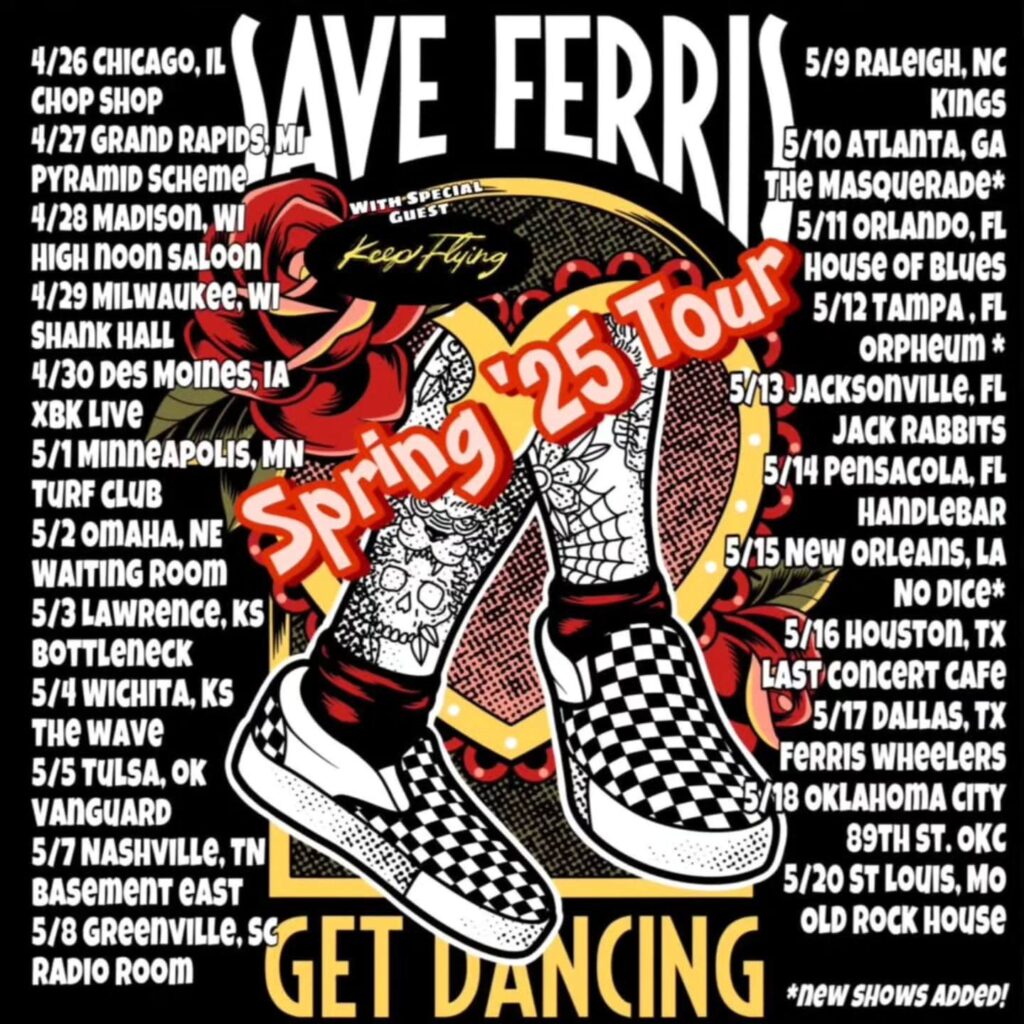
And now the band are as strong as ever. At the time of speaking to Powell, the band were just about to embark on a lengthy tour of the US throughout the remainder of April and the entirety of May. They are then heading over to Europe for shows in the UK, Germany, Slovenia, of course taking in the festivals such as Slam Dunk and Rebellion in the UK and Tolmin Punk Rock Holiday Festival in Slovenia.
Festivals are a great way to spend the Summer, playing on bills with your favourite bands and catching up with old friends. But with the lineups on festivals such as Riot Fest, Punk Rock Bowling and When We Were Young all being absolutely jam packed with incredible performers, is this draining custom away from the club gigs? If people are saving all their money to have these blow out sessions seeing 30+ bands in one extended long weekend, is there the money and the will left over to pack out the mid-size venues in the other 9 months of the year? The very mid-size venues that are vital for the pipeline of new bands but also (for old farts like me) preferable to a festival anyway? There is good reason to be concerned- The Music Venue Trust estimate that on average, we were losing one music venue per week to closure in 2023. Australia lost 1,300 or one-third of its small and mid-sized music venues since the COVID pandemic. Stats for the US were not readily available but as they will face the same challenges we can extrapolate from these available figures. Save Ferris are certainly keen to do their bit to bask in the Summer sun on a festival stage but also make sure the venues across their tour circuits are well looked after:
“I will take a club show any day over a festival. I love festivals, and I love that they bring bands of different genres together which is cool. Like, we’re playing with Refused and Propagandhi on a bill soon and that is so cool! I love that we are on a bill with Propagandhi and they have a song called Ska Sucks! I love that band so we get to play on festivals in Europe and I love that vibe and I get to see my heroes play.
But at a festival, you are one of many 1000s of people there, so seeing an artist so far away from you… there isn’t as much sincere connection. At a club show you get that different connection.
But headlining a club show, there’s more pressure. You are headlining- so there’s more stress. You have to sell tickets and for me, I feel an added sense of responsibility because I want to keep these venues alive so I am trying to work out ‘can this tour finance itself? Can we pay the musicians?’ We have to sell merch and tickets so the venue will want us to come back and we can continue this relationship with these venues that are really important to me.”
If you want to see the band live this Summer, there are plenty of opportunities and you know you are watching a band that not only have a notoriously fun and engaging live set, but a band that take their role in supporting the rest of the bit players in the industry seriously. You can check out the dates closest to you HERE.
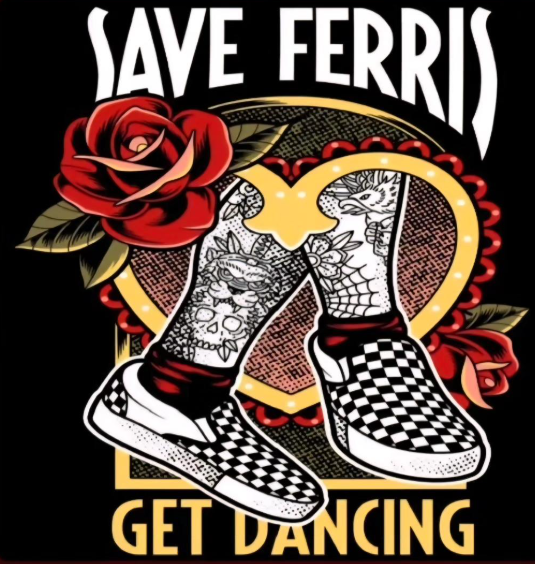
The band have a new single called ‘Get Dancing’ out NOW and to make sure you are prepared to see this performed live, the band have released a very helpful instructional video with all the dance moves needed to really get involved when Powell tells you to move your feet this Summer!
You can listen to ‘Get Dancing‘ on the platform of your choice and find your options for shows, videos and merch HERE.