Release the Yeast!
Our story- or specifically that of the Yeastie Girlz- begins in that most famous of punk venues, the Gilman Street Project. Nestled in Berkeley, California it is a building that has become synonymous with the rise in popularirty of pop punk bands from Green Day to Rancid, from Offspring to AFI. It is a place intrinsically linked to the 1990s US punk story, and known for its commitment to the ethos behind punk as much as championing the music.
If it sometimes seems like it must have been a bit of a sausage fest on stage in the late 80s and early 90s punk scene, then you wouldn’t be completely off base. In fact, it was observing a lack of representation in the club in the late 1980s that led to the founding three members- Jane, Cammie and Joyce- getting up on stage with an impromptu performance and forming the group that they would name ‘Yeastie Girlz’.
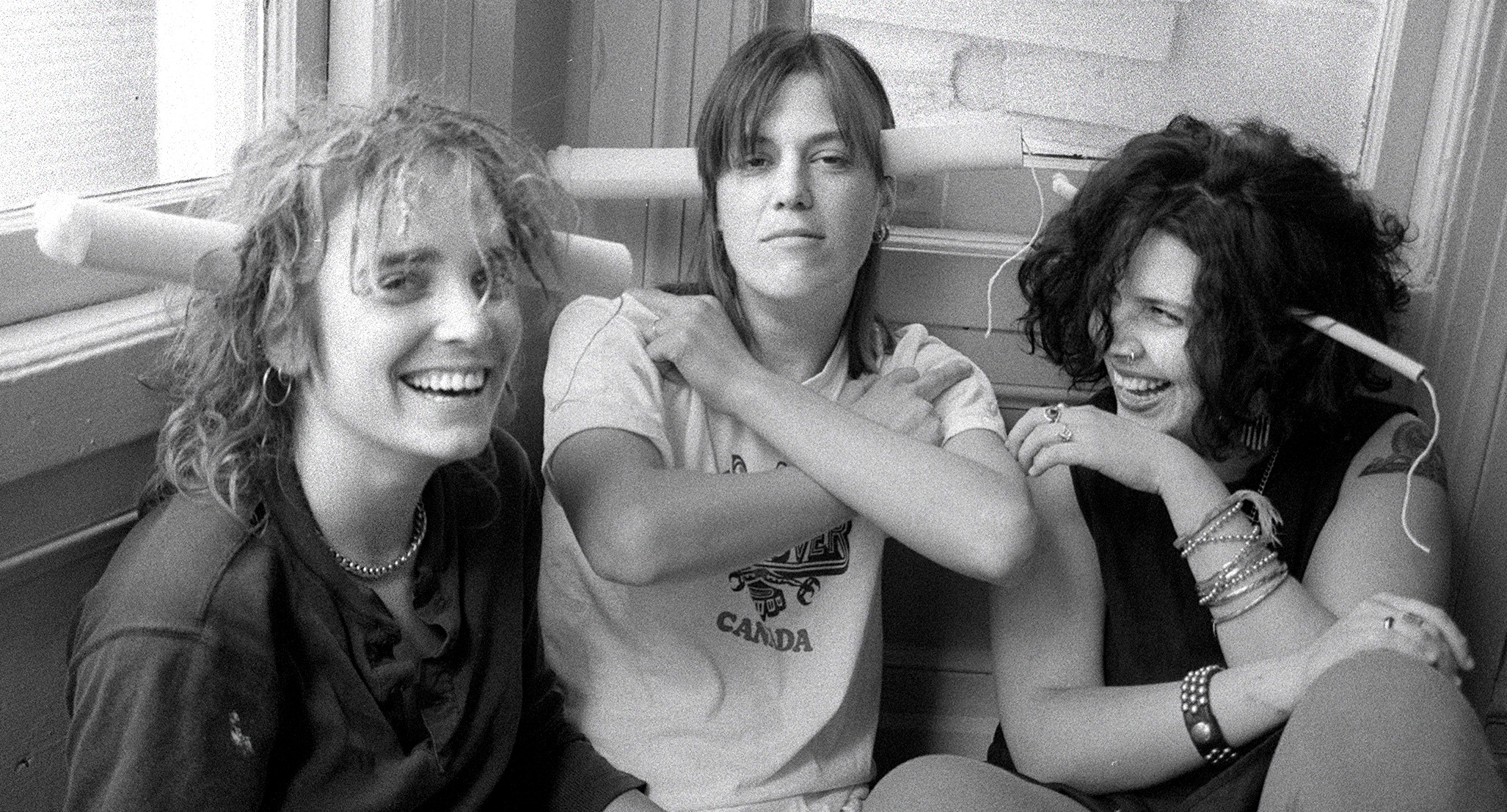
Punk Rock Philosophy caught up with all four members of the group- Jane, Cammie, Joyce and Kate- as we Zoom-chatted and shared the story of the group’s inception, the messages and impact of the music and how they made their ‘yucky surprises’!
Ovary Action
We start by setting the scene….it is the late 1980s (1987 to be precise) and Jane, Joyce and Cammie are at Gilman Street- a punk club they frequented and that they were engaged with as members of the punk community. There was a lot of rhetoric swirling round the club itself- a place that was trying to embody the punk ideals of eradicating sexism and racism and creating a utopian (or at least very progressive and safe) environment that welcomed all and gave everyone the chance to be part of the scene. But perhaps it is predictable that the reality on the ground (or in the pit) could be different.
Jane– “I would not say that the Gilman Street Project scene was overtly sexist- there wasn’t a lot of blatant harassment or people saying sexist stuff. And they would say they wanted to be anti-sexist and anti-racist but those things were part of our society, so just because you are in a scene that is rejecting them or speaking out against them doesn’t mean they are not embedded. There was all kinds of stuff there because it was baked into wider society.
I don’t think we consciously realized ‘oh this scene has a sexism problem which we will address by forming Yeastie Girlz’ there wasn’t that thinking, there was more the fact that the scene was very open to silliness and humour and craziness and doing random things. Like throwing garbage at the crowd, playing basketball with a bouncy ball, riding little big wheels around! There was a lot of ‘boy energy’ and part of our thinking was like ‘lets throw that same intensity and energy but make it girl energy- messy girl energy!”
Intentional or not (and probably unintentional on the part of the male head honchos and scene stalwarts), there were irksome things that seemed to demonstrate a lack of consideration of how women and girls were experiencing the scene.
Cammie– “I remember at the time the Beastie Boys had just become crazy popular and they had this song that was like ‘girls to do my laundry, girls to tidy my room’ [their 1986 track ‘Girls’] and it was being played in between songs in the club over the PA and that was another impetus to coming up with the name Yeastie Girls. I also remember noticing that the bands with women in them tended to get shows that were all women. So, you wouldn’t get Kamala and the Karnivores in with the Fugazi show, it would be like ‘lets lump all the women bands into one night’ and then no one would come”.
The lack of representation in the punk scene is a tale as old as time (or as old as the scene itself anyway) and it appears the perceived ‘boys club’ in late 80s Berkeley was a motivating factor for the girls to channel their inner Yeasties…
Joyce- “I remember being at Gilman Street every weekend and sometimes during the week as well, to help out or see a show… and I would say it was 90% men and 10% female. I don’t remember many women there apart from us”.
Cammie– “There were some, but it was a boys club”.
Kate– “It was a girlfriends thing- the girlfriends would come out”.
Joyce– “There was definitely an active core involved in the collective who were basically doing the work behind the scenes, but they were not up on stage. There weren’t any positions of authority, so they were just kind of disregarded in the background”.
Jane– “My memory of the timing of everything is that there were not any all-women bands or shows until the Yeastie Girlz and then we started pulling that in. There might have been the occasional show that Kamala or Bitch Fight played that were all female or something but they did not get the prime spot, they were definitely overlooked. And the compilation ‘Turn It Around’ was released [a comp featuring various local bands to raise money for the DIY punk scene] there were no female bands, not even any bands with women in them on that compilation. Literally all boys out of like 14 bands.
We raised an issue about it, and they invited us to be on it [the band’s song ‘Yeast Power’ is a track on the album] but that was almost worse because we were the token band and they get to claim they have taken care of things. At the same time, they were all our friends and there was no antagonism there and I don’t think we had an analysis as to why this was, we just knew we had to challenge it”.

Girlz on Stage
And so, something snapped and on one fateful day a chance was seized to get on the stage and take up some space without having to wait for an invitation that may or may not come:
Cammie– “Our origin story is that we were at this big show that was all day long- and it was all dudes. Jane, Joyce and me were standing around and we are talking about what a boys club it felt like. Beastie Boys were playing over the PA and we said ‘we should form a band called the Yeastie Girlz wouldn’t that be funny!’ And then Jane ran off and wrote a song…”
Joyce– “Jane read the lyrics to our friend Dave who was in a band playing that day and he said ‘you guys have to come up before we go on’, and I remember we all had the lyrics on a piece of paper, shaking, and like ‘OK we’re gonna do this!’”
Cammie– “It was right before Crimpshrine came on…they were standing there waiting for us to get off!”
Joyce– “And we did it! I was scared shitless and just reading these lyrics off the paper and trying to sound like we were rapping….and afterwards, just all the endorphins kicked in and we were like wow that’s amazing. It is such a blur for me but it was really powerful. And the lyrics that Jane wrote were amazing…she wrote this really cool song”.
It was a formative and exhilarating experience and the band continued their mission to bring tales of yeast into the spotlight! They wrote songs about the lesser-spoken about aspects of the female body- secretions, smells, gases and hormones- using a straight-talking but fun and irreverent approach to destigmatise the machinations of the human body. Songs about defecation (‘Talkin’ Shit‘), female masturbation (‘Fuck Yourself‘), and all things vaginal such as their debut song ‘Yeast Power’ were witty and challenging in equal measure. As you can probably guess, approval and acclaim was not universally offered.

Cammie– “We started doing more shows and started to get a feel of what people thought of what we were doing. Some of the women would be embarrassed because we were talking about things like tampons and stuff you don’t talk about- you don’t talk about bloody tampons! Or we were talking about yeast infections and they were there with their boyfriends so it was embarrassing. But other women were just ecstatic that people were talking about this stuff.
And then you have the boys…who were so shocked and yet they thought they could take anything! And I always thought that was just so punk of us…to shock these guys who thought they were so punk and couldn’t be shocked. But there were playful people in the club who were excited by it and went along with it and sang along. It was a real mix. There were times when I would bring a bunch of tampons to teach people how to play music on the tampon applicator and people would get up and it would be like an orchestra. It wasn’t just the women- all kinds of people trying to get their lips around the tampon applicator!”
Joyce– “My feeling is that we felt emboldened in our little Gilman Street scene with the people and bands that were supportive and we would have fun. When we started branching out to do shows, that is when a lot of the aggressive and scary stuff happened. We would play in somewhere a little bit more rural, like one bar we played in and got some very aggressive reactions. Although it was scary, looking back in retrospect I was happy we were making people think. Maybe at some point these people would think twice about the substance of what we were talking about.
The scariest things I saw were in Germany. I remember playing to some of these really hardcore punks that were just not having it, they were trying to pull us off the stage, I remember having to kick them off the stage”.
Kate– “It was me and you Joyce and it was partly because they couldn’t understand what we were saying but there was something else about us they didn’t like!”
Joyce– ”It went from one extreme to the other in terms of reception- you had to be ready for anything!”
Cammie– “It is not that we only wanted to shock- we also wanted to educate and make people laugh. But we did want to push boundaries.”
And they certainly did push boundaries- and there were many still existing to push. Fresh off the back of the Reagan years, the formation of the Yeastie Girlz came at a time when the influence of conservative ideology was strong and figures like Phyllis Schafly (an anti feminist campaigner) and Pat Robertson (an evangelical public figure) had made an imprint in the social fabric. Young, radical women did not have a platform- unless they seized one. And in that absence of women’s narratives, misinformation and stigma abound- something the Yeastie Girlz tried to address by their performances and music, although not always in a consciously planned way.
Jane– “I don’t know if we planned everything out and analysed it and made really thoughtful decisions like ‘we are going to do this and that and this will be the impact’ we were having fun and we had thoughts and ideas behind it but we were not always externalising that. But when we met a woman who had been a feminist type educator in the 60s/70s interviewed us for Maximum Rock N Roll, that was the realization that what we were doing sits in the framework of radical feminist empowerment and education.
When we were doing it, things were not talked about. Female masturbation was not talked about. The other piece of the whole Gilman Street thing was that sex wasn’t talked about at all. Consent wasn’t talked about at all. Our generation experienced a lot of sexual assault and dating violence, a lot of coercion and what you would now is sexual assault- people in high school passing out and waking up to someone having sex with them. That sort of thing was so normalised and yet not talked about”.
Cammie – “We get fan mail from people saying our music saved them or they learned so much. People tell us ‘I was a young trans kid and I listened to you and learnt things’ and it is interesting to see how it resonates and empowers, it is amazing to get the feedback we get from people. And people our age, writing and saying ‘I was in the mid-west and I got your tape and it empowered me’. Colin Burrows who lives in a small town in Canada wrote a zine about how the Yeastie Girlz changed his life.”

Shits and Giggles
There was a serious impact of what the band were doing. But for Cammie, Jane, Kate and Joyce, their primary objective in many ways was to have fun! And listening to the group in 2025 talk together about their time in the band, their sense of fun and mischief shines through. When asked if they had fun there was an enthusiastic consensus that they had a ball.
Kate– “It was all so spontaneous and funny, we wanted to laugh!”
Cammie– “People would be ordering our demo tape as we had an ad in MRR that said ‘suck my smelly vagina’ and that you would get a yucky surprise if you ordered our demo tape and a lot of people wanted to know what that was. We would take the tapes and put them in bags with this red goo and a tampon and send them out- so they had to touch the tampon and the goo in order to get the tape. That was fun! That kind of stuff tickled us.
And What about Vagina May?!”
Kate– “Vagina May was extraordinary she was a fab life size vagina that you could wear, she was so beautiful! Taffeta and black lace. Our faces would peer out and the clit would be right on top of your head”.
Cammie– “I was 19, we were not thinking about the feminist impact and those things but now we look back I think how great that we were exposing people to come face to face with the reality of being a person with a vagina- all these boys in the punk scene who wanted to be curious and hear our music they were forced to touch a tampon! All of those things I think are brilliant now but then I just though it was funny”.
Kate– “It was also spontaneous. A lot of it came from a very joyous place- a very happy place. We were happy with who we are, we may have lived through different stages of adolescent awkwardness but it was very connected in a genuine way, we were not over thinking. It was also in the moment”.

Life took the members of Yeastie Girlz in their own directions and they have all gone onto amazing things but kept their strong friendship and interest in the legacy of the band. The band are now archiving and preserving the songs, videos and articles that tell their story and making them available on the web so a new generation of fans can hear their message of body acceptance, female pleasure and yucky fun. There is a legacy to protect and ensure that in the age of Tik Tok samplers, their material is not being misused or their ethos being lost or distorted. A seemingly endless task in this day and digital age but worthwhile to keep the band’s message in tact. And for fans new and old, how do the band want listeners to feel when they hear ‘You Suck’ or ‘Fuck Yourself’?
Jane: “Empowered. Feeling that you are not alone and all the weird thoughts and stuff you’re going through, problems with a partner, an infection, you don’t know how to do something for yourself, asking for the things that you like. I hope that there is a message for you.
And you can get up and just do whatever, you never know where it is going to go? Do what you wanna do”.
You can trawl through the band’s archives by visiting their website.
You can find their videos on their You Tube channel
And follow them on social media!
Thank you to Jane, Kate, Cammie and Joyce for their time and generosity in telling their stories!

Great article once again. I just wish you would offer a link to bluesky.