This post is a slight departure from normal Punk Rock Philosophy topics in some ways….and yet in other ways it is exactly what the purpose of the site has always been which is to spotlight the things that make punk so positive and how it can change people’s lives. But what prompted the specific focus of this mini-post is something a bit more personal, so forgive my indulgence. And I want to give a trigger warning that I am going to reference my work in the violence against women and girls sector and mental health struggles, so please proceed only if you feel comfortable with these topics.
I have worked for 16 years in the domestic and sexual abuse sector in a variety of roles, one of which was supporting victims of trafficking. This was only a couple of years in a long career, but it had a profound effect on me. It is a particularly challenging and intense area to work in and meant I could never look at the world around me in the same way again. Not just for obvious reasons- being so close to such brutality and seeing the impact of such callous exploitation. It was more in the scale of the unknown- the constant feeling that you are only ever seeing the most minute percentage of a sprawling, desperate situation. Knowing that for any one person I was able to make contact with or who became known to services or authorities or who turned up somewhere to be identified and helped….there were countless others who just disappear. Human beings moved about like stock, far from home and stripped of identity and who often meet fates unknown. The vulnerability and the precariousness of their existence meant something could happen to them and the world wouldn’t know. Thinking about this genuinely still keeps me up at night. I often find myself looking at rows of houses as I pass by them in the car or on a bus and getting this overwhelming feeling of hoping everyone in each of these buildings is safe and well, but knowing that statistically that isn’t going to be the case in all of them.

What does any of this have to do with punk? Well not a lot…on the surface. But I was reminded of the above when reading some social media posts about the benefits of attending punk gigs and how supportive and cathartic it can be to find yourself having this joyous and affirming experience surrounded by other people. And all of that is true- everything that has already been said and observed about the benefits of group experiences in the context of live music is absolutely correct- and evidenced.
A 2024 paper by Trost et al for Proceedings of the National Academy of Sciences of the United States of America conducted experiments on brain activity of people watching live music and had all kinds of findings about the parts of the brain that are activated during concerts including emotional processing. A 2018 study undertaken by Harvard University investigated the science behind the ‘goosebump’ effect when watching a gig. They found that 55% of the 100 participants wearing monitoring devices were susceptible to experiencing goosebumps during live entertainment, with a chill inducing moment most likely to occur within the first minute of a performance. A 2026 study by Becker et al looked specifically at how the physical presence of the musician onstage has positive physiological and psychological benefits that differ from those we experience when we are listening to recordings of music. So we know live music is good for the soul and we know that attending venues regularly and being social with other people can foster a feeling of being part of a community…and that in turn has its own benefits etc etc. The self-supporting cycle of ‘good feels’ continues.

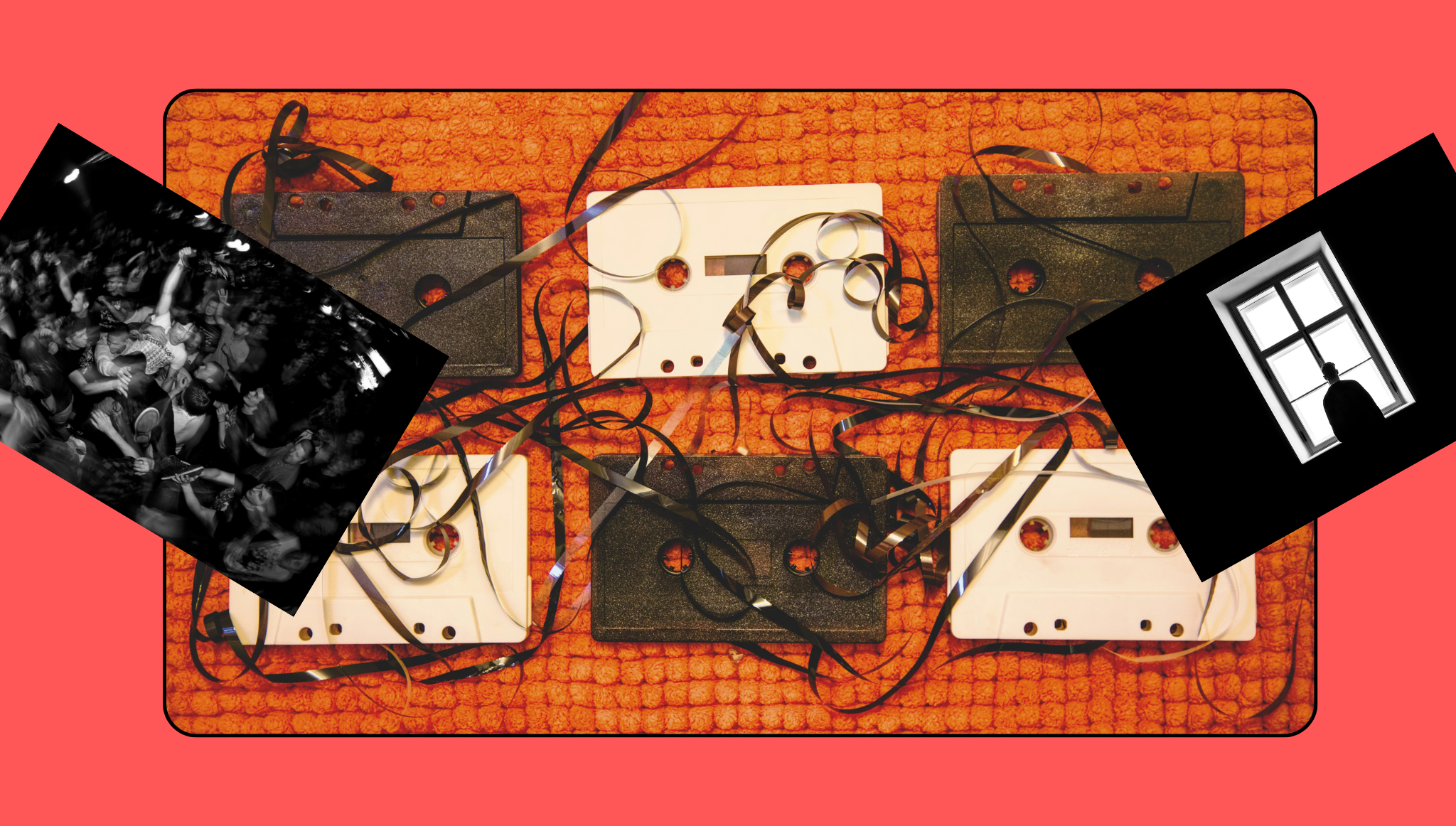
But bringing this whole discussion back to my first point about people not being visible…for me, there is this whole other aspect of going to gigs that has an even more fundamentally wholesome and vital purpose. Being in a room full of people, hearing the same sounds, surrounded by the din of conversations and knowing you’re one beating heart in the midst of so many others is a very human experience. And you don’t need to actively be part of a community or even speak to another person in order to access the phenomenon I think is the most important- being seen. Not in a ‘oh everyone notices me’ sense of being seen, but being in an environment where you’re observed as a fellow person at that moment. It’s the opposite of being hidden, the antidote to invisibility, a safeguard against the vulnerability of isolation. This isn’t about being ‘seen’ in the social sense of being ‘known’ – it is really more basic than that. A person stood next to you at a gig has chosen to come out into the world for that moment, to be surrounded by people they probably do not know, and take up space and maybe just for those few hours, they have the insulation of the crowd to reassure them that they are part of other people’s lives for a short moment.
Having seen what happens when people are deprived of this, I feel overwhelmed with contentment at gigs now, scanning a crowd and thinking that there’s an indisputable fact that these people are all here now, together. This is not me making sweeping statements that every one at a gig is safe just by merit of being there (I know they are not, a whole chapter of my book Rebel Grrrls is about this). I know that not everyone at gigs has good intentions and women in particular have to risk assess and manage their safety constantly. That is a slightly separate topic that I have written on extensively. And I also acknowledge that for some people, visibility is actually not safe and they make the choice to not be seen for their own well being. That may well be their choice and for them, people do not equal protection but quite the opposite.
But human connection is essential for survival- this is one of the reasons isolation is such a powerful and effective tool of abusers and predators. In 1957 a sociologist called Albert Biderman developed his ‘Chart of Coercion‘- a framework by which to understand the methods of coercive control and psychological torture inflicted against prisoners of war, but his model is applied to lots of other areas of mind control and abuse. Along with degradation, humiliation and threats one of the other effective tactics? Isolation. Social psychologists Morris Rosenburg and Claire McCullough wrote that feeling noticed is “the most elementary form of mattering.” Research from University College London highlights that chronic feelings of emptiness—often tied to feeling overlooked or unanchored—strongly correlate with suicidality.

The list of research citations and stats could go on forever, but one conversation I had with someone I worked with years ago put a more immediate, human spin on it. Talking about their battles with feeling disjointed from society they said they sometimes wake up and say to themselves that if no one makes eye contact with them that day, they will decide not to be in the world anymore. So each day, someone who doesn’t know the stakes involved, someone just randomly going about their business will save this person’s life just by making eye contact and maybe even a little nod or a smile. A life potentially validated and saved in a split second- recognition that says ‘you’re here, I’m here…and I can see you’ and that’s all it takes. It doesn’t require anything further, the point is for someone to confirm you are there.
The people that I wasn’t able to reach or help across my years of frontline work were deliberately prevented from being in situations where they were noticed. To be noticed would have made them more likely to get support or intervention of some kind, hence why such steps are taken to keep someone separate from the rest of society. Because for all of society’s many over-arching and systemic faults, it is ordinary people that are the eyes and ears of the world and people do step up to help others. That’s why ‘other people’ or ‘outsiders’ are a predator’s biggest obstacle.
The people standing shoulder to shoulder with us at gigs may be in very different circumstances than those people I used to work with and whom I spend my nights worrying about. But that doesn’t mean that there isn’t something riding on them reaffirming their place in the wider world. A look around and a nod or a smile in someone’s direction isn’t just old fashioned politeness or awkward social reflexes…it can be more than that. You don’t have to make friends with everyone you meet, nor make yourself feel uncomfortable by smiling and nodding your way through a crowd of strangers. But maybe just always be mindful of the power of ‘noticing’ and the fact someone has made it to the same place at the same time as you for a shared experience will mean a lot more to them than just hearing their favourite songs performed live. Every gig you go to might be saving someone’s life in that room and if that sounds dramatic….I’m a punk and so it’s allowed.
