
The next track ready for our deep dive is from Belfast punks Problem Patterns who diagnose the problems facing the NHS…
Public health is one of the most fundamental issues that can affect any nation, as well impacting us all as individuals at some point in our lives. It is unlikely any one person will go through life without ever needing any assistance with their health- human bodies are certainly prone to all sorts of complications. The provision of healthcare- its accessibility and its effectiveness- is an urgent issue and one that can be quite literally a matter of life or death.
The pandemic highlighted the importance of a society with a robust health service- one that can protect its citizens and react quickly, and that will provide reliable information as well as equitable resources. Everyone wants to be healthy, free from pain, with a good quality of life and when you boil things down, ultimately a fair society would want to support people’s health as much as we possibly can.
The health service doesn’t seem like the sort of topic we hear about in a lot of punk songs. Mental health sure, (and we have a post about that HERE) but not the actual construction and delivery of a health service. Particularly a track that is bang up to date with the contemporary issues that dog healthcare in the UK. Until now.
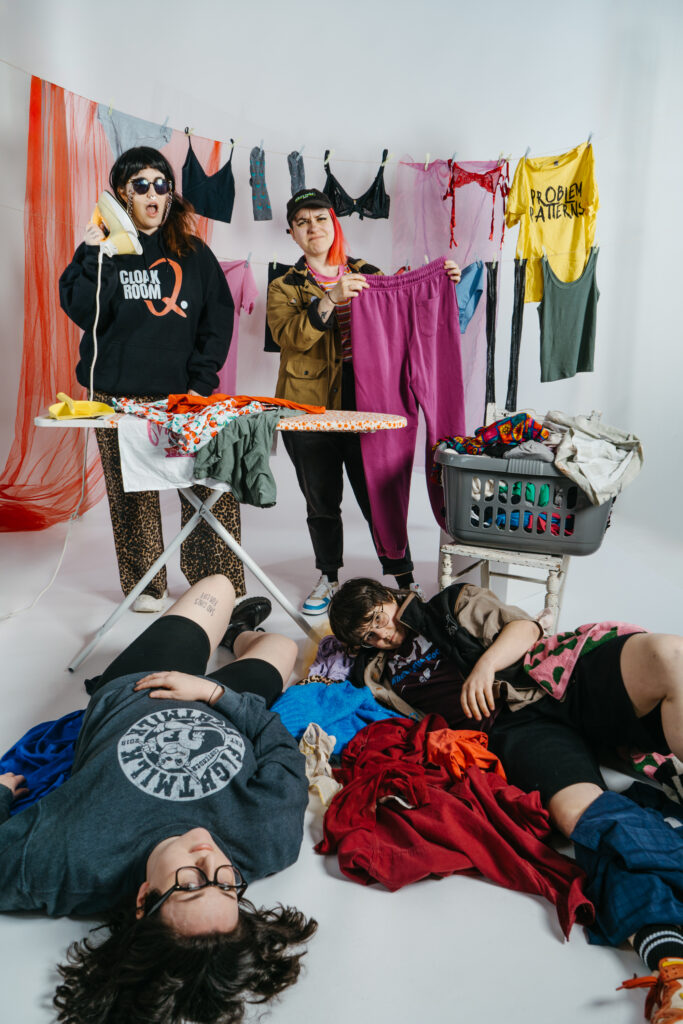
Belfast punk quartet Problem Patterns took to the mic in 2023 to voice the concerns of much of the nation in their cracking track ‘Who Do We Not Save?’. Taken from their critically acclaimed debut LP ‘Blouse Club’ (2023), the single was accompanied by a video that saw the band portray NHS emergency workers being bounced around a rickety old ambulance with an unfortunate patient awaiting ‘cost effective’ treatment. In other scenes, the band are cackling executives privatising the same service and dancing in a blizzard of money. The message is pretty clear- someone is getting rich from cutting corners in the NHS and it aint the nurses.
Speaking about the track at the time, the band said:
“Our healthcare system has been falling apart for years due to cuts, and the pandemic only sped up the process. We constantly see campaigns telling people to ask for help, especially in regards to mental health, but the reality is that the services we need are under too much pressure. The line ‘We’re one or two paychecks away’ refers to the fact that many of us will be in a lot of trouble if privatisation becomes reality here.
The title itself is lifted verbatim from Dominic Cumming’s** photo of the white board used to plan the UK government’s early response to COVID. We thought it would be fitting to use it for the single’s cover art, too.”
So, what does the track cover and what’s the reality for the nationalised health service in the UK- are things really that bad? Punk Rock Philosophy has been looking into things…

This is gonna hurt
The National Health Service (NHS) of the UK was established in 1948 and officially opened by Aneurin Bevan (the then Minister of Health). It gave the right to access health services offered by doctors, nurses, midwives, and dentists without having to pay directly in England and Wales, Scotland, and Northern Ireland.
The 1948 leaflet that was sent out to people when the NHS started said:
‘Everyone – rich or poor, man, woman or child – can use it or any part of it. There are no charges, except for a few items. There are no insurance qualifications. But it is not a “charity”. You are all paying for it, mainly as taxpayers, and it will relieve your money worries in time of illness’.

It is a gargantuan organisation- more people work for the NHS than any other organisation in the country: 1.3 million people in England alone. In fact, if you search for the top 10 biggest employers in the world, the NHS will rank in there somewhere, alongside the US Department of Defense and Walmart.
And the range of services available (in theory) on the NHS is vast- GPs, emergency health services, specialist services and treatment, fertility care, midwifery, mental health services, contraception…the ambition being to care for the nation in all aspects of their health and wellbeing from ‘cradle to grave’. Sounds great.
So why then, have we got to the point in 2025 that faith and trust in this beloved institution have been so significantly eroded that approval ratings from the public are at an all time low? Some of the points covered in Problem Patterns’ track can cast some light on how we got to this point.
“Check on your friends” they say
“Check on your friends”
But what do you do when you can’t do
Enough to help them?
We pass the load between us
Until we self destruct
We have to bear a system
That doesn’t care for us”
A robust community spirit would mean that checking on friends, family and neighbours would be commonplace and we would all take some role in detecting who needs additional help and when. Maybe, some of us might even provide some of that support ourselves before involving a professional- and figures show many people are doing just that.
It is a chicken-and-egg situation- did we scale down NHS provision because more care is provided in the community and via friends or family; or is that type of caring increasing because professional provision is falling away? Turns out, it is the latter.

The Caring About Equality report 2025 estimates approximately 11.9 million people are currently providing unpaid care in the UK, and a significant proportion will be young carers. The ‘No Choice But to Care’ report 2024 found that 62% of unpaid carers say they had no choice but to take on the role due to a lack of other care options. And this in turn has an impact on the health and wellbeing of those juggling care as over half (58%) of current and former carers feel they are at a disadvantage as they are not able to look after their own physical or mental health in the same way as those without caring responsibilities. This is beyond good community/family care- it is filling a gap caused by state negligence, under resourcing and lack of access.
Hurry Up And Wait
Into the next verse, the band touch on another thorny topic- waiting lists:
“And when we’re finally strong enough to
Admit we’re at our worst
We get stuck on waiting lists
While those with power get served first“
There are a multitude of health campaigns on UK TV screens, billboards and social media pages that aim to spread awareness and information on a variety of important health related issues. From how to spot the signs of different types of cancer, to how to stop smoking or encouraging people to reach out for mental health support etc- we’ve all seen at least one of the posters or adverts. This is not just laudable but a necessary role of any public health provider- getting vital messaging out. But many people (Problem Patterns included) point out that it’s all very well encouraging people to ‘lean in’ and seek help at early stages for worrisome symptoms or struggles, but if the corresponding service is unable to then respond with appointments, tests and treatment, then…what are the public (who are now worried about their health) supposed to do?
Waiting lists across NHS services are a major source of consternation for the government who know that this drastically influences the public’s perception of their competence. Reducing waiting lists was a major campaign pledge by Starmer’s Labour government, but this is proving tricky to achieve due to chronic and long term underfunding, the impact of Covid and increasing demand for services.
According to NHS England figures, almost half of the 6 million people (2.99 million) needing NHS treatment have had no care at all since joining a hospital waiting list after being referred by a GP- neither their first appointment with a specialist or a diagnostic test. And Starmer’s 18-week wait target requires 92% of patients to wait less than that amount of time by 2029. Currently the figure is 61.3% but research by the Health Foundation shows that, on current trends, waiting times will still be over 20 weeks by July 2029. And what about for mental health support? New analysis of NHS data by Rethink Mental Illness suggests eight times as many people are still waiting for mental health treatment after 18 months compared to physical health care.
And these delays in receiving treatment- and the experience of trying to get specialist support- impact public confidence that they will be looked after by the state. The Nuffield Trust and King’s Fund found that in 2024, just one in five British adults (21%) were ‘very’ or ‘quite’ satisfied with the way in which the NHS runs. This is the lowest level of satisfaction recorded since the survey began in 1983 and shows a steep decline of 39 percentage points since 2019.
A Kick in the Privates
Problem Patterns make reference in both the lyrics and video to ‘Who Do We Not Save?’ to the general principles, ethos and accessibility of the NHS being undermined by the profit motive. This may come as a surprise to some, particularly to those who believe that the UK health system is a purely altruistic model that is fully funded by tax payers with no profit-making or private investment at all. This hasn’t been the case for a while.
“We’re one or two paychecks away….While they decide who they won’t save…
When they put up a paywall/ Could you pay to stay alive?”
The Conservative government in 1992 introduced Private Finance Initiatives (PFI) which gave private companies contracts to provide public facilities including buildings like hospitals and schools. Then the use of PFIs really accelerated under the Labour government in the late 1990s. Although these contracts are being phased out now, the contracts already entered into are still running, and the repayments required from the public sector are still being funnelled to the private companies who invested in these public services. It is estimated that these contracts ended up costing the government 40% more than if they had just built the hospitals and invested in the resources themselves. So, the suited and booted executives that Problem Patterns portray in the video could possibly be those PFI-owning private firms, raking in guaranteed profits at the expense of patient care and staff investment.

And what of introducing fees for us as patients? Is the UK heading towards a US-style system where each patient will be expected to be able to cover the costs of their treatment either with insurance policies and/or their own financial contributions? Well, Nigel Farage has said it would be his Reform Party’s policy to introduce a French-style insurance model to the health service. We’ve already seen the private health sector becoming a common resort for those who desperately need intervention and who can’t stand languishing on NHS waiting lists. But that option- of pivoting to private provision- is not something everyone can afford. A 2023 review in The Lancet found “aggregate increases in privatisation frequently corresponded with worse health outcomes for patients” overall. “The implications are that privatising the NHS is not corresponding with better quality care, and, starkly, that the inverse might be true,” said Ben Goodair, one of the review’s authors.
And people are aware of this. According to a 2022 survey, 93% of people surveyed said that the NHS should be free of charge when you need it and 82% agreed it should primarily be funded through taxes.
Get Well Soon
Whilst there is certainly plenty of doom and gloom when thinking about the National Health Service, it would be remiss of us not to also highlight that despite the huge challenges the institution faces, it continues to deliver care to millions of people every hour of every day.

An IPSOS poll in 2022 found that the NHS continues to top the list of reasons people feel proud of Britain (with over half of respondents putting it as the thing they feel most proud of). It seems there is a high level of support in the UK for what a universal health system represents- that those who are sick or in need of any kind of support to help them live a healthy, dignified and fulfilling life, should be able to access it without worrying how they are going to pay for it. And that’s got to signal some level of underlying empathy that we all have for each other.
Problem Patterns have managed to condense a wide-ranging assessment of the crisis in UK public health provision, into a track that is barely over 2 minutes long. In the true punk tradition, it’s about maximum impact and incisive critiques in a bitesize chunk- just enough to bring the issue to the front of fan’s minds. Privatisation, long waiting times, a funding dilemma, increasing care needs…all their own mini complex issue, all concisely addressed by the Belfast punk band in one killer track.
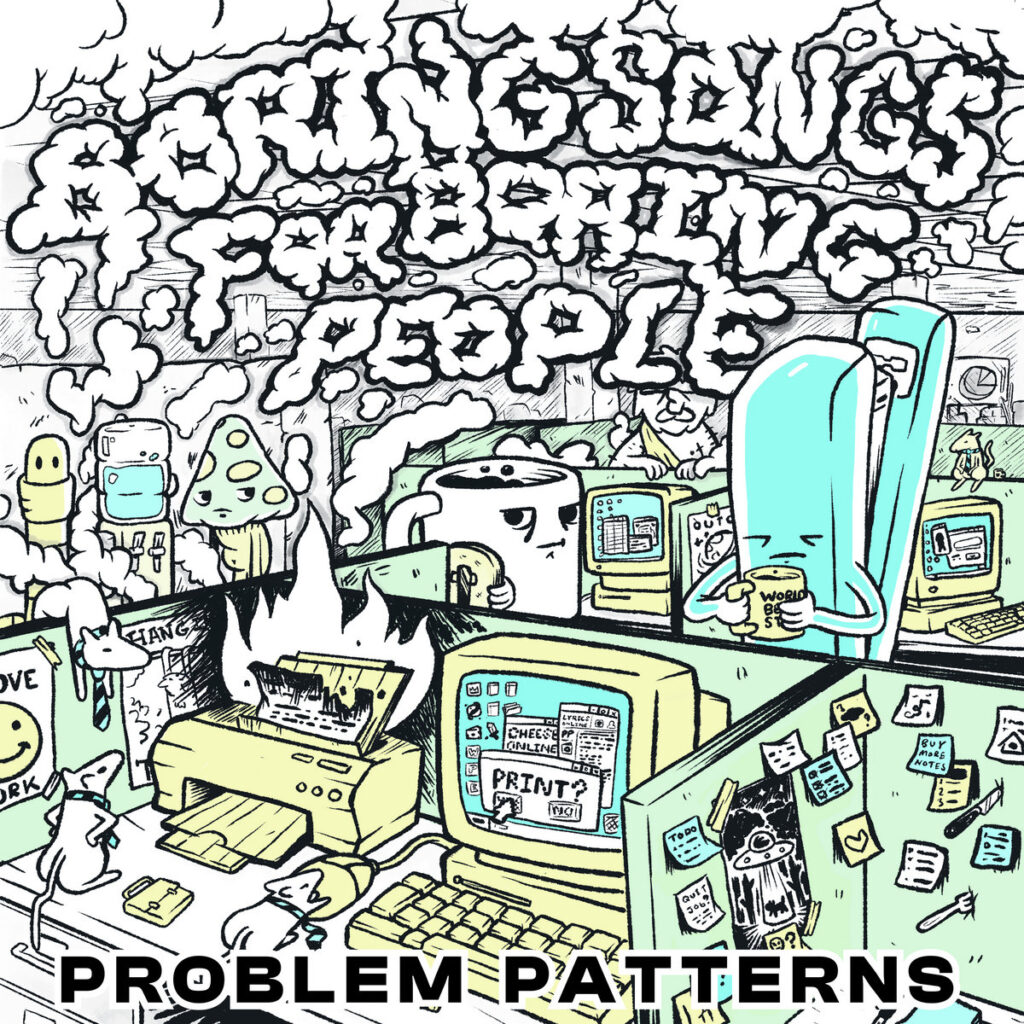
Problem Patterns have a new EP – ‘Boring Songs for Boring People‘- out NOW. Head to their BandCamp page to buy/stream and check out their other tracks including the subject of today’s post!
**OK, so if you are outside of the UK, you might be fortunate enough to not be familiar with the cartoonishly Machiavellian character that is Dominic Cummings. He was a political strategist employed by Prime Minister Boris Johnson and we all unfortunately got to know him during the Covid pandemic due to his almost farcical lack of normal humanity and his personal conviction that he’s some sort of genius. Anyway, if you don’t know him don’t bother to look him up.
