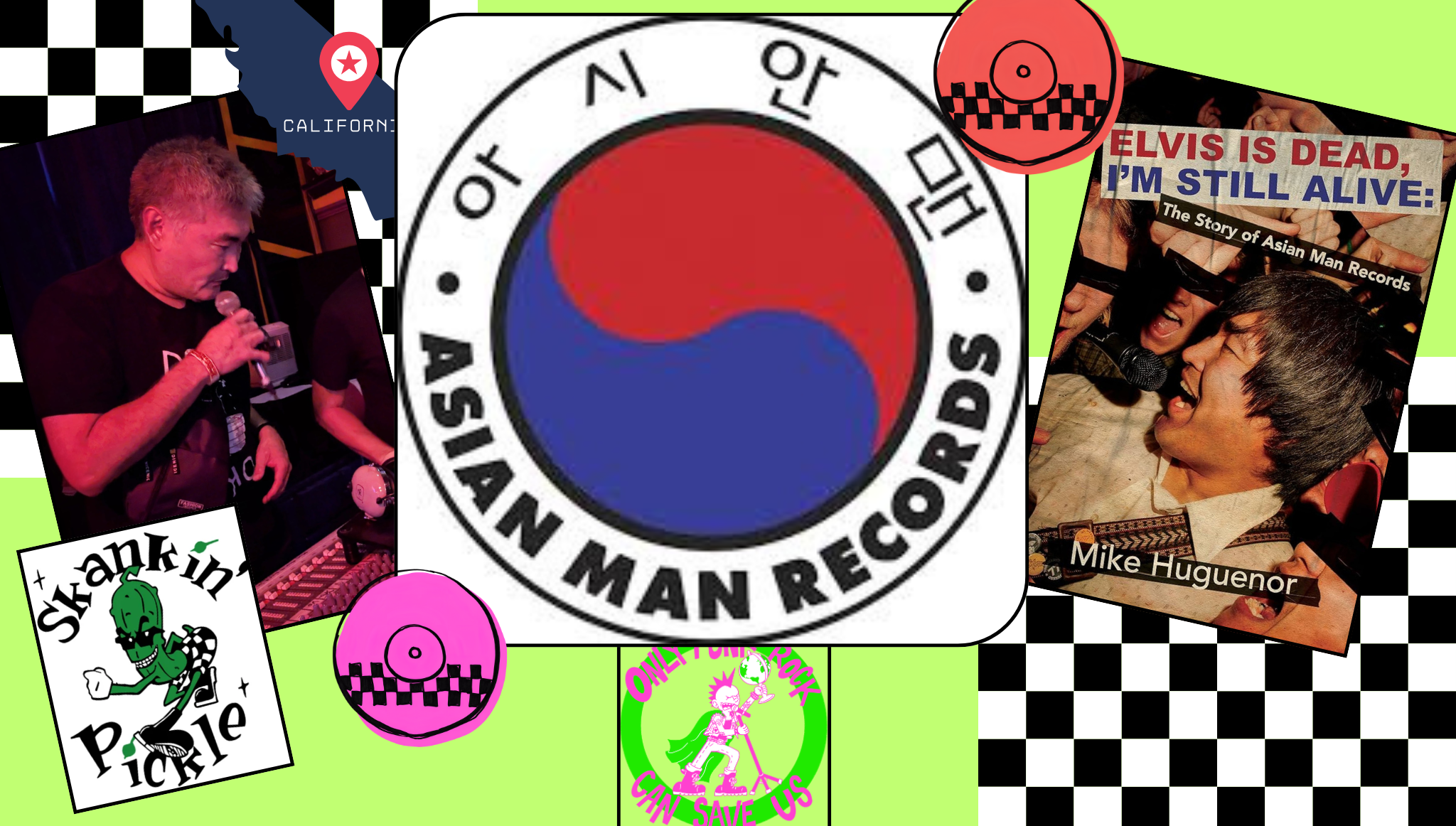
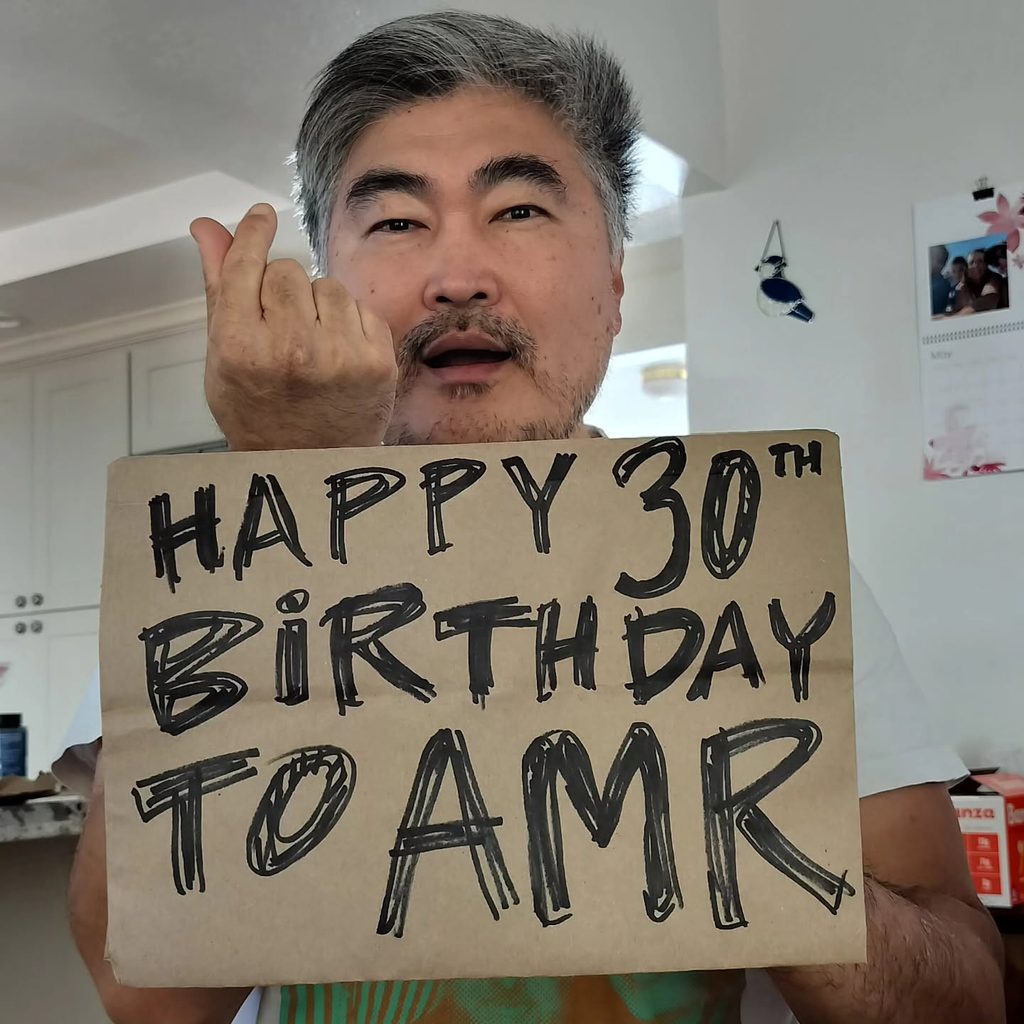
Can you believe that one of the most beloved DIY punk labels of all time is celebrating 30 years in the game? Well you better believe it! Asian Man Records has spent three decades putting out one solid release and absolute gem after another, and the origin story and ethos of the label has earned it a place in many a punk’s heart.
To commemorate such a milestone, 2026 sees the release of a new book chronicling the triumphant story of AMR and its founder and head honcho Mike Park. ‘Elvis is Dead But I’m Still Alive- The Story of Asian Man Records’ written by Mike Huguenor tells the story of how to build a record label through love, community and dedication to your values. In this post, Punk Rock Philosophy looks back over the label’s development and the bands that it continually champions. And we’ve got exclusive insights from Park and Huguenor themselves!

Some people will be familiar with how Asian Man Records began, or more specifically WHERE it began. It’s humble beginnings are well known in the scene and is one of the things that many people find inspiring and endearing about it. In a run-of-the-mill garage attached to his parent’s house in Los Gatos, California, a 20-something Mike Park decided to start a mail order record label. And all these years on, the label has grown in scope, reputation and influence but the operational hub is still that trusty garage space. There are some great pictures throughout the book of the space, lovingly packed with piles of records, stickers and shipping labels – this is where the proverbial magic happens!
As the author Huguenor states in the book- the irony of this operation being on the doorstep of Silicon Valley is quite poetic. The tech bros pursue expansion at any cost, whereas Park and his community of helpers and supporters have kept things small and authentic despite various opportunities to sell out or scale up. That is not to say AMR is an endeavour that has never grown because it has- 400 albums have been released on the label. This is not a rinky-dink label with no clout but Park has always been keen on quality not quantity, and that has kept him in business for 30 years:
“TBH, it doesn’t even come close to feeling like 30 years” Park told us, “The thing is, I’m still doing the exact things I did when I started. I still do mail order daily, respond to emails, and try juggling the insanity that is the music business. I’d say 95% of the records I’ve released I’m extremely proud of. 4% I’m like meh and 1% I’m like WTF was I thinking. But I guess those are pretty good odds overall“.
Park’s foray into the music scene certainly pre-dates his record label- he didn’t start off as a label exec! He’s been in numerous bands from his teen years and toured pretty extensively for a lot of his formative years. He was there throughout the boom of ska punk bands that cut their chops in the West Coast in the late 80s/early 90s. Park was a contemporary of bands like No Doubt (formed in ’85 but their 1995 ‘Beacon Street Collection‘ really put them on the map) and Voodoo Glow Skulls (formed in ’88 but 1993 debut album ‘Who Is, This Is?‘ gained acclaim). These were productive and fun years for Park and the wider scene that he ensconced himself in.
During this time, Park was one of the founding members of ska band Skankin’ Pickle. Formed in 1989, they gained an immense amount of popularity and had a particularly extensive and gruelling tour diary as a result. Touring with the band and meeting other musicians, fans and members of the scene was a great way of building a network of people who loved the music- a network that Park would be able to utilise later on. To quote from the book:
“You just talk and you make friends,” Park says, describing a process familiar to any band that has ever planned their own tour. “You start meeting people from the scene. And you keep building.”
Whilst in the band, Park took inspiration from those other figures who has set up their own labels to distribute their own recordings (think Black Flag’s Greg Ginn starting SST or Ian Mackaye starting Dischord) and started Dill Records from his bedroom in 1989 and ran the label (which put out Less Than Jake’s debut album ‘Pezcore‘ in 1995, amongst other notable releases). By 1996, the relentless touring schedule for Skankin’ Pickle was taking its toll but the business of running a label was seeming like a good fit . As Park told Huguenor: “I thought, this is how I could actually make a living in the music business, cause I ain’t gonna be making it touring“.
By 1996, Dill was not thriving and neither was Park. Creative differences as to which bands to sign, some legal wranglings and general disagreements and fractures meant that in 1996 Park left the band and the label. It was after saying goodbye to Dill permanently that Asian Man Records was born- in the space directly underneath where Dill had started.
And that was 30 years ago! What is Park’s secret to this longevity in such a cutthroat and precarious business? He shared his insights with Punk Rock Philosophy:
“For me, longevity comes from doing things that I know I’m capable of. Not promising anything that’s not realistic and making sure I give myself enough grace for mistakes. My favorite part of AMR is being surrounded by my hobby… music. In particular, bands rooted in DIY and community. There are a lot of great memories over the last 30 + years, but most importantly the friendships that go above and beyond the music business. I’ve officiated the wedding for 17 musicians who have released music on AMR. To have that kind of trust in me on their most important day is truly humbling for me“.
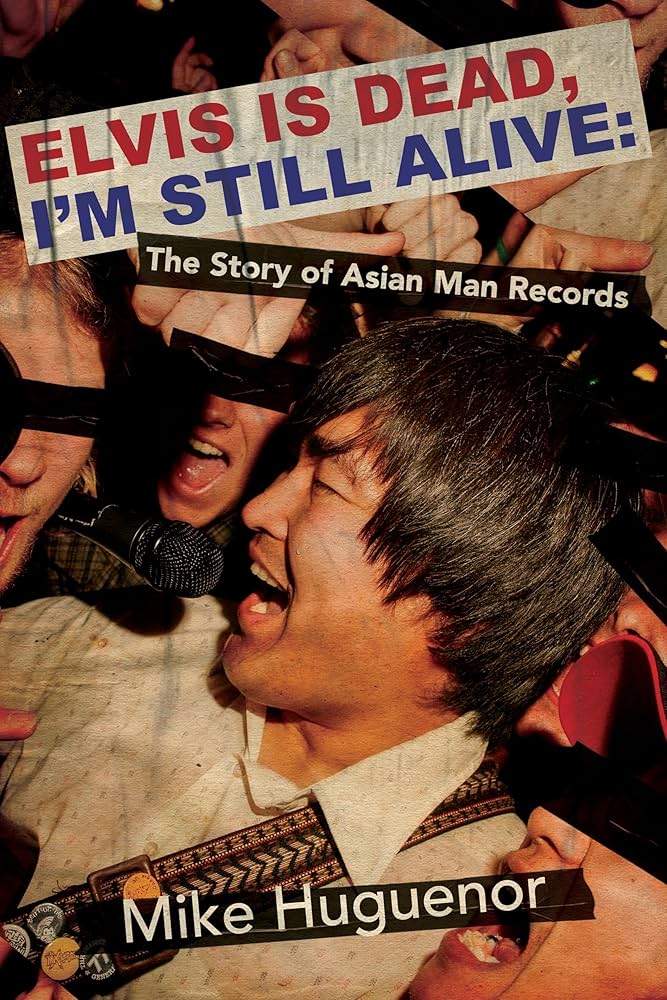
Huguenor’s book takes us on the whole journey- those fun, frolicking years in bands up until his mid-20s, up to now where Park is a man in his mid-50s and a fixture in the modern punk landscape. There’s still plenty of fun and frolicking of course! The book explores the various other projects that Park has been involved with alongside AMR including the Plea for Peace Foundation and its 2004 tour, his subsequent musical projects such as The Chinkees through to Ogikubo Station (a musical duo formed with Maura Weaver from The Mixtapes). Weaved in throughout all of this is extensive testimony and anecdotes not just from Park himself (with whom Huguenor clearly has a close relationship) but also from each friend, family member, band and scene-ster that Park encounters along the way from high school through to now. The book also explores Park’s childhood as a Korean-American in a predominantly white neighbourhood (Census data from 1980 for the city of Los Gatos shows the city’s population was then 95.9% white).
Running alongside the human element is fascinating explanations of the mechanics of the music industry that to a lay-person such as myself give great, clear insight into just what goes on behind the scenes of your favourite records- the band politics, the distribution contracts, the gig logistics, the conflict resolution and the sticky webs of networks that go into getting you and I the music we want to add to our collections. To that end, the book is also a fascinating timeline of changing tastes, processes and priorities in the biz.
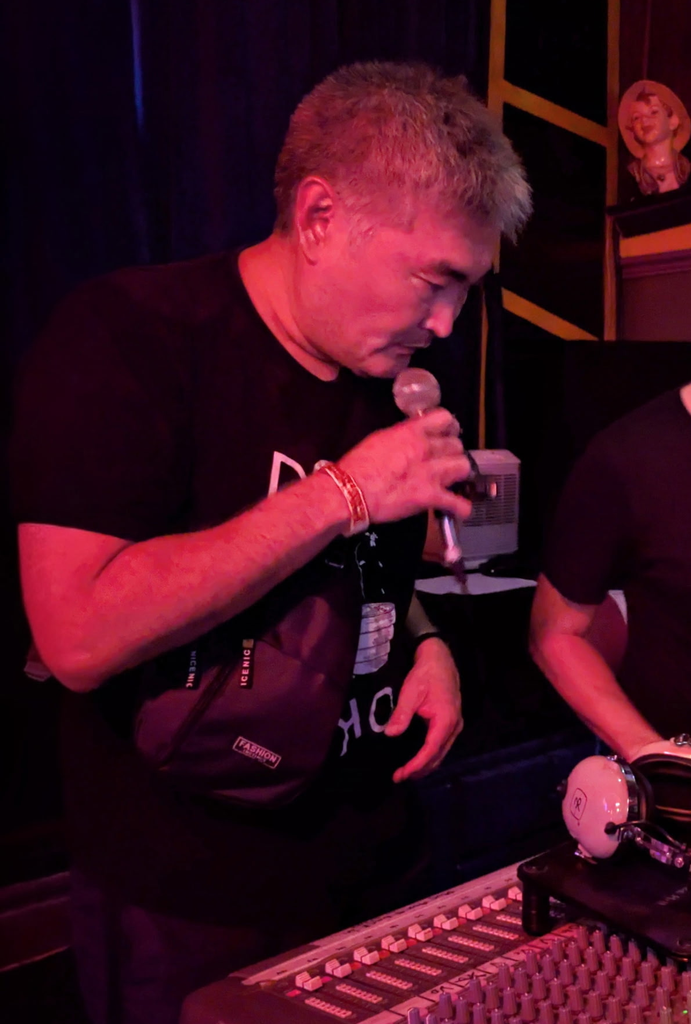
And as such, it is a tale of resilience that Park has not just managed to weather these changes but thrive regardless. Asian Man Records has released albums from some of the most essential punk and ska acts of the last few decades including The Lawrence Arms, Alkaline Trio and Joyce Manor, and has championed emerging acts like The Atom Age, Sweet Gloom, The Abruptors and dozens more. And he has managed to do so without drastically changing the business model or even relocating out of that trusty appendage to his parent’s home. Despite million dollar offers to buy the label, Mike carries on and continues to support and promote new bands.
‘Elvis is Dead But I’m Still Alive’ explores themes such as how to maintain your ethics, passion and vision when branching out with projects that inevitably garner success or require working with a lot of other people. How do you run a label that is successful for the artists and can keep going but is also consistently ethical? How can you be in band and get your music out to a lot of people without exhausting yourself physically and mentally and fracturing friendships? Although AMR has not been without its challenges and it hasn’t all been plain sailing, Park definitely seems to have found his place and way of doing things that protects his spirit. This is something that Huguenor captures so well and we asked him why he thinks Asian Man Records still endures:
“I think Asian Man has been a vital part of punk rock in the last thirty years. Not only for breaking some major voices through, but for continuing to provide a space for smaller voices to enter into the scene. That is the part that I think is the most important of all: that it continues to keep things affordable so that young bands have a place to release a record, reach a wider audience, enter into a community, and possibly even receive a royalty check“.
Huguenor- a musician himself in bands like Shinobu, Hard Girls, and Jeff Rosenstock as well
as making solo music under his own name- had been editing the weekly paper in San Jose for a few years when he realised AMR was about to turn 30 and no one had yet told the full story of the label. We asked what he had learned in the process of getting this book written:
“I was constantly being surprised while writing this book. Whenever something really surprised me, I tried to make sure it made it in. The dream that inspired Matt Skiba, the night the Tantra Monsters almost died on the river, MU330 performing with Bobby Brown, Mike Park almost signing two very important Japanese punk bands, a promoter loving music because his pastor tried to get him to fear it…these are human moments that surprised me with their vulnerability, honesty, and unexpected poetry. My hope is that the book is full of moments like these“.
And it certainly is- it’s a thorough, uplifting and quirky tale of punk rock grit and adventure. And who doesn’t need a bit of that?
To really explore the back catalogue and current roster of Asian Man Records head to the website HERE and getting Park to work packing an order for you!
‘Elvis is Dead But I’m Still Alive- The Story of Asian Man Records’ by Mike Huguenor is out now via Clash Books – you can get your purchasing options HERE! It’s also out in many great book shops!
New to Asian Man Records? Need some starter suggestions? Have a journey through the label’s history with these albums:
-‘Pezcore‘ by Less Than Jake (1995)
-‘Ghost Stories‘ by Lawrence Arms (2000)
-‘Goddamnit‘ by Alkaline Trio (1998)
-‘Reverie‘ by Sweet Gloom (2023)
-‘… Are Coming‘ by The Chinkees (2022)
-‘Joyce Manor‘ by Joyce Manor (2011)
-‘Don’t Let Me Lose Ya‘ by Kevin Seconds (2012)
-‘What’s Mine‘ by Teens In Trouble (2024)
